[Log In] []

Exploring the science and magic of Identity and Access Management
Sunday, November 29, 2026

How Much of Your Profile Data Can Your Social Network Share?

Identity
Author: Mark Dixon
Monday, June 13, 2011
4:21 pm

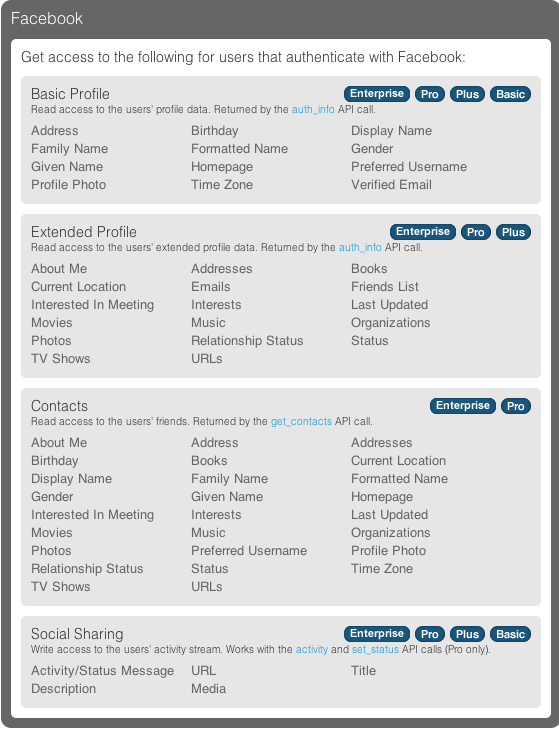
An interactive “Provider Guide” provided by JanRain shows what personal profile data maintained by popular social networks is available to applications that connect to these networks.  It is not surprising that Facebook offers the most information; LinkedIn is second in terms of available profile attributes.

With these many attributes about subscriber identities available through published API’s, it isn’t surprising how the stock market placed a huge premium on LinkedIn, and will presumable do the same with Facebook.  Perhaps the most valuable attributes are the connections to other people – friends on Facebook, contacts on LinkedIn.  The Network Effect arising from the interconnectivity of all those online members triggers extreme value momentum, particularly when all those relationships can be exposed to third parties.

Comments Off on How Much of Your Profile Data Can Your Social Network Share? . Permalink . Trackback URL
WordPress Tags: , ,
 

Source Doc: Cybersecurity, Innovation and The Internet Economy

Information Security, Source Doc
Author: Mark Dixon
Friday, June 10, 2011
10:09 pm

Cybersecurity DocumentThe Department Of Commerce  Internet Policy Task Force recently released a “green paper” document entitled, “Cybersecurity, Innovation and The Internet Economy”

Secretary of Commerce Gary Locke stated in his introductory message:

The following report – or green paper – recommends consideration of a new framework for addressing internet security issues for companies outside the orbit of critical infrastructure or key resources. While securing energy, financial, health and other resources remain vital, the future of the innovation and the economy will depend on the success of Internet companies and ensuring that these companies are trusted and secure is essential. This is the area of our focus.

The report recommends that the U. S. government and stakeholders come together to promote security standards to address emerging issues. It also proposes that the government continue to support both innovations in security and on the Internet more broadly. We believe this framework will both improve security at home and around the world so that Internet services can continue to provide a vital connection for trade and commerce, civic participation, and social interaction around the globe.

I haven’t yet read the complete document but, but look forward to understanding the policy recommendations laid out in the document and seeing how they influence the improvement of information security in the years going forward.

Comments Off on Source Doc: Cybersecurity, Innovation and The Internet Economy . Permalink . Trackback URL
 

The Meaning-of-Life App

Humor
Author: Mark Dixon
Friday, June 10, 2011
9:37 pm

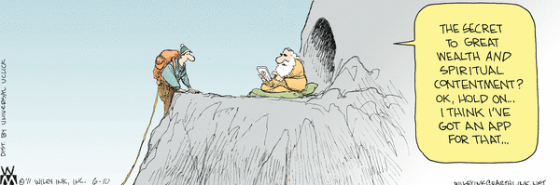
I wonder … is this app GPS-enabled?

I’d love to meet that old Non Sequitur guru – and buy that app!


Recalculating the Apocalypse

Humor
Author: Mark Dixon
Friday, June 10, 2011
9:28 pm

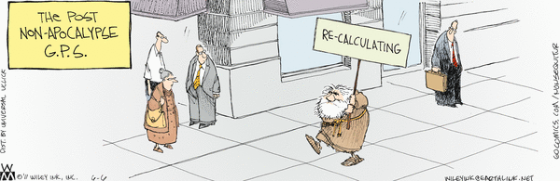
Thanks to Non Sequitur for revealing how a new definitive date for the Apocalypse will be determined.

I hadn’t realized that the eternal GPS system was involved.

Comments Off on Recalculating the Apocalypse . Permalink . Trackback URL
WordPress Tags: ,
 

Personal Visits … So Old Fashioned!

Humor, Social Media
Author: Mark Dixon
Saturday, June 4, 2011
4:42 pm

A bit of wry humor from Ben and Patty …

Ben

… but is it too far from the truth?

Comments Off on Personal Visits … So Old Fashioned! . Permalink . Trackback URL
WordPress Tags: ,
 

What is more valuable – linkages between web pages or between people?

Identity, Social Media
Author: Mark Dixon
Saturday, June 4, 2011
12:50 pm

I was intrigued by a headline I read this morning, “How Facebook Can Put Google Out of Business,” by Ben Elowitz (@elowitz), co-founder and CEO of Wetpaint.

Elowitz started by stating his admiration for Google:

Google LogoI used to envy Google and the vast digital empire that Schmidt commanded.  Google had one of the most intricate monopolies of all time. It had the most impressive dataset the world had ever seen; the most sophisticated algorithm to make sense of it; an audience of a billion users expressing their interest; and more than a million advertisers bidding furiously to reach those consumers at just the right moment.

What’s more, it had captured the ultimate prize: increasing returns to scale. Only Google could spread such huge R&D costs among an even more humongous query volume, all while offering advertisers the chance to reach most of the population with one buy. Google had earned its success.

However, he as concluded that Facebook offers more inherent value than Google, and can beat Google at its own game:

FacebookWhile Google has amassed an incredible database consisting of the fossilized linkages between most Web pages on the planet, Facebook possesses an asset that’s far more valuable—the realtime linkages between real people and the Web.What does this mean, and what are the implications here?

Well, in a nutshell, Facebook has stored a treasure trove of distinctive data that, if fully utilized, could put Google out of business.

I’m not astute enough to predict whether Facebook or Google will win, but I believe Elowitz has identified an important distinction between the inherent value of linkages:

“linkages between real people and the Web” [and, I might add, linkages between real people] –  primary Facebook value

or

“linkages between Web pages” – primary Google value

Relationship WebWe call linkages between people “relationships”. In my previous post, each line on my LinkedIn connection map represents a real life relationship. Some of my Linkedin relationships are closer in real life than others, just like some of my Facebook “friendships” are closer than others.  But they are real.  They do exist.

My real-life relationships represented by Facebook or LinkedIn have inherent value to me.  Both Facebook and LinkedIn provide real value to me through the services they provide.

Google has proven that there is great business value in “linkages between web pages”.  I believe companies like Facebook and LinkedIn are beginning to how to business value can be derived from “linkages between people”.  Google is clearly trying to catch up in the relationships business, where Eric Schmidt admits they have failed.

It will be interesting to see how they, and other companies of their ilk, will continue to succeed for fail in business as they leverage (in a positive sense) their understanding of my relationships, hopefully without exploiting (in a negative sense), the private information I entrust to them.

Comments Off on What is more valuable – linkages between web pages or between people? . Permalink . Trackback URL
 

Visualizing my LinkedIn Network

Identity
Author: Mark Dixon
Friday, June 3, 2011
5:27 pm

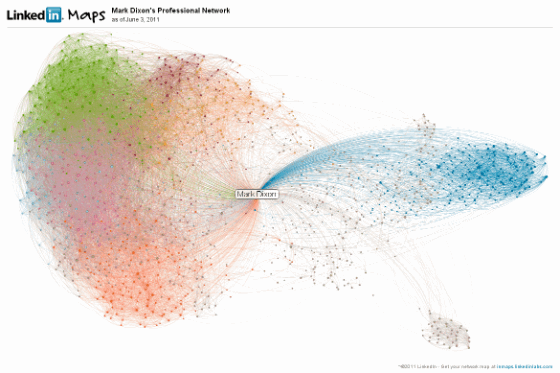
The interesting diagram included below is a visualization of my LinkedIn network.  It represents the 1,220 contacts I have connected to via LinkedIn, since I joined as the 8,638th member of LinkedIn way back in 2003 or 2004.

LinkedIn Map

The blue cluster in the upper right contains primarily contacts from the Arizona business community.   The small cluster in the lower right corner contains contacts from Eyring Research Institute, the company where I spend the first dozen years of my career.  The big, multi-colored cluster to the left grew from my interaction with Sun Identity Management and Telecommunications groups, with many people transitioning with me to Oracle or other companies, plus folks I have added since the Sun Acquisition.

You can get your own map at InMaps, from LinkedIn Labs.


Comments Off on Visualizing my LinkedIn Network . Permalink . Trackback URL
 

Cloudbook.net – Repository and Community

Cloud Computing
Author: Mark Dixon
Wednesday, June 1, 2011
4:51 pm

Cloudbook.net is not just an attractive website and rich repository of information.  It is a community dedicated to cloud computing:

Cloudbook was founded to help accelerate the adoption of cloud computing by providing a comprehensive and educational resource community. Cloudbook brings together top thought leaders, experts and specialists to share their insights and experiences with the broader public. Their contributions are indexed into a comprehensive resource directory that is easy to navigate and allows users to familiarize and connect with the authors.

Cloudbook has also compiled a number of additional resources including events, products & services, research projects, news articles and more to deliver a complete resource for the community.

This evening I registered on the site and applied to be a contributor.  We’ll see what they say!


Comments Off on Cloudbook.net – Repository and Community . Permalink . Trackback URL
WordPress Tags: ,
 

RIP Tom West – MV/8000 Mastermind

General
Author: Mark Dixon
Wednesday, June 1, 2011
4:15 pm

I began my career in 1977 as a digital electronics designer.  My first engineering project was to design a color graphics display, powered by a 16-bit microprocessor and interfaced to a Data General Eclipse minicomputer that was at the heart of a Minuteman II missile simulator at Hill Air Force Base in Utah. So when Tracy Kidder wrote his seminal work, “The Soul of a New Machine,” about the development of the Data General MV/8000 computer, I was immediately hooked.  I still have that book on my office bookshelf.
On May 19th, Tom West, the leader of the Eagle Project which spawned the MV/8000 computer, passed away.

The New York Times article reporting his death was appropriately entitled, “Tom West Dies at 71; Was the Computer Engineer Incarnate.”

Mr. West and his team of engineers at the Data General Corporation, in Westborough, Mass., developed a 32-bit microcomputer that briefly led the field of digital processing in the early 1980s, when the computer industry was poised between the eras of the mainframe and the PC.

…

Joseph Thomas West III was born in Bronxville, N.Y., on Nov. 22, 1939, the son of an American Telephone and Telegraph executive who moved the family often. Mr. West attended four different high schools before enrolling at Amherst College, where both his father and grandfather had received their degrees. Because of low grades, however, the college asked him to take some time off. He spent a year playing folk music and working part time at the Smithsonian Observatory in Cambridge, where he first became interested in computers, before returning and finishing his studies with a major in physics.

Thanks, Tom, for inspiring me at an early stage of my career!  May you rest in peace as your legacy lives on.

Comments Off on RIP Tom West – MV/8000 Mastermind . Permalink . Trackback URL
WordPress Tags: ,
 

Personal Data: The Emergence of a New Asset Class

Identity
Author: Mark Dixon
Wednesday, June 1, 2011
8:49 am

I discovered an interesting white paper this morning, entitled, “Personal Data: The Emergence of a New Asset Class,” published by the World Economic Forum. The introductory page describes the issue:

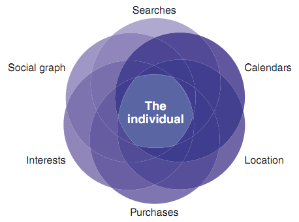
This personal data – digital data created by and about people – is generating a new wave of opportunity for economic and societal value creation. The types, quantity and value of personal data being collected are vast: our profiles and demographic data from bank accounts to medical records to employment data. Our Web searches and sites visited, including our likes and dislikes and purchase histories. Our tweets, texts, emails, phone calls, photos and videos as well as the coordinates of our real-world locations. The list continues to grow. Firms collect and use this data to support individualised service-delivery business models that can be monetised. Governments employ personal data to provide critical public services more efficiently and effectively. Researchers accelerate the development of new drugs and treatment protocols. End users benefit from free, personalised consumer experiences such as Internet search, social networking or buying recommendations.

And that is just the beginning. Increasing the control that individuals have over the manner in which their personal data is collected, managed and shared will spur a host of new services and applications. As some put it, personal data will be the new “oil” – a valuable resource of the 21st century. It will emerge as a new asset class touching all aspects of society.

The report uses a definition of personal data provided by the World Economic Forum in June 2010:

Personal data is defined as data (and metadata) created by and about people, encompassing:

  • Volunteered data – created and explicitly shared by individuals, e.g., social network profiles.
  • Observed data – captured by recording the actions of individuals, e.g., location data when using cell phones.
  • Inferred data – data about individuals based on analysis of volunteered or observed information, e.g., credit scores.

The report concludes:

Personal data will continue to increase dramatically in both quantity and diversity, and has the potential to unlock significant economic and societal value for end users, private firms and public organisations alike.

The business, technology and policy trends shaping the nascent personal ecosystem are complex, interrelated and constantly changing. Yet a future ecosystem that both maximises economic and societal value – and spreads its wealth across all stakeholders – is not only desirable but distinctly possible. To achieve that promise, industries and public bodies must take coordinated actions today.

Five major recommendations are explored in depth:

  1. Innovate around user-centricity and trust
  2. Define global principles for using and sharing personal data
  3. Strengthen the dialog between regulators and the private sector
  4. Focus on interoperability and open standard
  5. Continually share knowledge

As both an owner of personal data and as an Identity and Access Management practitioner, I find this subject compelling and timely.  The white paper is certainly worth the read.


Comments Off on Personal Data: The Emergence of a New Asset Class . Permalink . Trackback URL
WordPress Tags: ,
 
Copyright © 2005-2016, Mark G. Dixon. All Rights Reserved.
Powered by WordPress.