[Log In] []

Exploring the science and magic of Identity and Access Management
Friday, December 5, 2025

The Value of the “Real” Handshake

Identity, Social Media
Author: Mark Dixon
Tuesday, November 16, 2010
5:38 am

Trade shows are a great place to meet face to face and build stronger relationships with your industry press.Several years ago, before Facebook and LinkedIn became household names, a partner and I formed a company named “Network Handshake LLC” and proceeded to develop a bit of social networking software called “ConnectArizona.com,” in an attempt to bring together like-minded individuals in the Arizona business community.  It was a really interesting project, but without adequate capital and marketing support, ConnectArizona.com and Network Handshake really never got off the ground (although I still own the domain names).

Time has shown that the concept of “shaking hands across the network” really has legs.  How many connections do you have on LinkedIn?  How many friends on Facebook?  What other social networks do you use?

However, this week, the power of the “real handshake,” not just the network kind, was reaffirmed.  After not attending an industry conference in well over a year, I am attending the Gartner IAM Summit in San Diego this week.  It has been delightful to engage with customers, partners and friends on a “real handshake” basis – to look individuals in the eye, firmly grasp their hands and speak directly, person to person.  While much can be said for the connecting power of teleconferences, webex sessions, email and social networks,  I believe there is no real substitute to direct, face-to-face, interpersonal communications. 

Viva la “real” handshake!

Comments Off on The Value of the “Real” Handshake . Permalink . Trackback URL
 

The Greek Tragedy: A “Zeus Trojan”

Identity, Information Security
Author: Mark Dixon
Thursday, September 30, 2010
8:49 pm

imageAccording to a CNNMoney.com article today,

“An international cybercrime ring was broken up Thursday by federal and state officials who say the alleged hackers used phony e-mails to obtain personal passwords and empty more than $3 million from U.S. bank accounts.

“The U.S. Attorney’s Office charged 37 individuals for allegedly using a malicious computer program called Zeus Trojan to hack into the bank accounts of U.S. businesses and municipal entities.”

Isn’t it interesting that this sophisticated imagecybercrime tool was named for Zeus, the Greek "Father of Gods and men" and the Trojan Horse, which allowed Greeks to surreptitiously enter the city of troy and end the Trojan War?

It is as if God and the Greeks have ganged up on the rest of us!

I’m sure God and the Greeks aren’t really conspiring against us, but the Zeus Trojan case underlines the tragic reality that bad guys are  becoming extremely sophisticated in their attacks, and that the cost to us all is rapidly increasing.


Want to Steal $11 million? Use Orphan Accounts.

Identity, Information Security
Author: Mark Dixon
Thursday, August 19, 2010
11:32 am

image I first met Alan Norquist back in 2000 while we worked together at Ponte Communications, a dot-com startup that lured me away from my first stint at Oracle.  Ironically, Alan came to Ponte directly from Sun Microsystems; I would later join Sun. At Ponte, we developed and sold technology to provision and configure a wide range of network infrastructure devices.  The company didn’t succeed, but it allowed me to focus for awhile on the issues involved in using a centralized application to provision multiple connected devices – a capability that was central to the growth of Identity Management Provisioning market a few years later.

In the ensuing ten years, Alan has been a successful serial entrepreneur. He is now Founder and CEO at another emerging company, Veriphyr, which uses advanced data analytics to automatically discover user access policy exceptions.

Again, our lives have converged because of common professional focus on Identity Management and Information Security.

In a recent blog post, Alan pointed out a recent Colorado legal case:

“A three person process for approving payments did not stop a lone insider from stealing $11 million by playing puppet master. The thief’s unauthorized access to the unused computer accounts of two other employees allowed her to pull the strings and make it appear financial payments had the necessary three ‘independent approvals.’”

A report from TheDenverChannel.com further elaborated:

Michelle Cawthra, who was a supervisor at the Colorado Department of Revenue, had testified that during the scheme, she deposited unclaimed tax refunds and other money in [her boyfriend’s] bank accounts by forging documents and creating fake businesses.

How did she do it?  Rather than de-provisioning access for a few employees who had reported to her, she allowed the orphan accounts to hang around.  Ms. Cawthra had convinced the departing employees to share their passwords with her, so she had multiple unfettered channels of access to complete her nefarious schemes.

Interestingly enough, preventative Separation of Duties (SOD) controls were in place.  But with appropriate orphan accounts within her grasp, Ms. Cawthra was able to circumvent those controls and complete her work.  In addition to preventative controls, a method to detect illicit use before the case got out of hand was really needed.

So if you want to steal $11 million, perhaps you can leverage orphan accounts.  However, if you are on the right side of the law, I’m sure Alan would be delighted to discuss how Veriphyr can help catch schemes like Ms. Cawthra devised.

Comments Off on Want to Steal $11 million? Use Orphan Accounts. . Permalink . Trackback URL
 

Data Breach Threats Beg For Better Access Control

Identity, Information Security
Author: Mark Dixon
Wednesday, August 18, 2010
9:39 pm

image Dave Kearns of Network World posted a thought-provoking article today,  “Data breach demonstrates need for access control policies.”

Highlighting a case where a tax collector in British Columbia, Canada, used government computers to look up “private tax files of hundreds of high-income individuals, apparently in the hopes of hitting them up for a business she ran on the side,” Dave observed:

There are so many things wrong here.

  1. Why weren’t controls in place to prevent, or at least raise a flag, when an agent accessed files randomly? Were they at least audited?
  2. Why did it take four years for someone to realize that there were shady dealings going on?
  3. How did CRA determine the "risk of injury"?
  4. Why aren’t the affected parties notified whenever there’s a breach?

In light of increasing government regulations covering data breaches, and hard evidence that the number of data breaches continues to grow, companies can be well-advised to

“review your governance, oversight and access control policies now — before your organization features prominently (and ashamedly) in a newspaper headline!”

Comments Off on Data Breach Threats Beg For Better Access Control . Permalink . Trackback URL
 

Source Doc: Open Trust Frameworks for Open Government

Identity
Author: Mark Dixon
Tuesday, August 17, 2010
9:51 pm

This document, Open Trust Frameworks for Open Government, is about a year old, but still provides an excellent overview of how OpenID and Information Card technology are being applied to provide citizen access to government websites:

Open government requires a way for citizens to easily and safely engage with government websites. Open identity technologies—specifically OpenID and Information Cards—fit this bill. They make it easier and safer for citizens to register, login, and when necessary share personally identifiable information across different websites and services. To bring open identity technologies and open government together, the OpenID Foundation and the Information Card Foundation are working with the U.S. General Services Administration to create open trust frameworks for their respective communities.

image  image

Comments Off on Source Doc: Open Trust Frameworks for Open Government . Permalink . Trackback URL
 

Sequim, Washington: To Swim or to Shoot?

Humor, Identity
Author: Mark Dixon
Tuesday, August 17, 2010
9:32 pm

Note: originally published on ILoveFreedom.com.


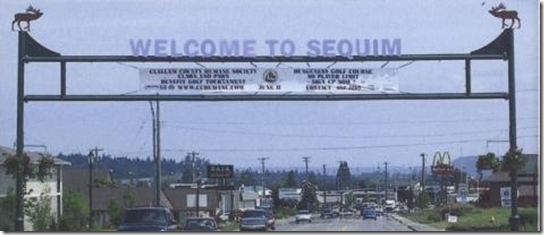
According to a recent post in the International Business Edge, the small town of Sequim, WA, has an Identity Crisis … big time:

“The U.S. town of Sequim, Washington has long claimed that ‘in the native language of the S’Klallam tribe, ‘S’Kwim’ means quiet waters,’ as indicated on the town website. However, a linguist recently revealed that a correct translation would actually be ‘a place for going to shoot.’”

image

“Quiet Waters” or “A place for going to shoot.”  Quite a contrast, don’t you think?

For more insight, you can Listen to the story on NPR.org or read the article by the Associated Press.

With shooting potentially involved, I wonder why NRA.org hasn’t picked up the story!

Technorati Tags: ,,
Comments Off on Sequim, Washington: To Swim or to Shoot? . Permalink . Trackback URL
WordPress Tags: , ,
 

Source Doc: XACML 3.0 Enhancements

Identity, Information Security, Source Doc
Author: Mark Dixon
Saturday, August 14, 2010
7:54 am

Presentation by Gerry Gebel of Axiomatics at Kantara workshop. Includes good overview of XACML and coverage of v3.0 enhancements.

image

Comments Off on Source Doc: XACML 3.0 Enhancements . Permalink . Trackback URL
 

National Strategy for Trusted Identities in Cyberspace

Identity
Author: Mark Dixon
Thursday, July 15, 2010
8:52 am

imageOn June 25, 2010, the US Federal Government released a draft document entitled, “National Strategy for Trusted Identities in Cyberspace.” This document proposes a strategy that:

… defines and promotes an Identity Ecosystem that supports trusted online environments.  The Identity Ecosystem is an online environment where individuals, organizations, services, and devices can trust each other because authoritative sources establish and authenticate their digital identities. 

The Identity Ecosystem enables: 

  1. Security, by making it more difficult for adversaries to compromise online transactions;   
  2. Efficiency based on convenience for individuals who may choose to manage fewer passwords or accounts than they do today, and for the private sector, which stands to benefit from a reduction in paper-based and account management processes; 
  3. Ease-of-use by automating identity solutions whenever possible and basing them on technology that is easy to operate with minimal training;
  4. Confidence that digital identities are adequately protected, thereby increasing the use of the Internet for various types of online transactions; 
  5. Increased privacy for individuals, who rely on their data being handled responsibly and who are routinely informed about those who are collecting their data and the purposes for which it is being used;
  6. Greater choice, as identity credentials and devices are offered by providers using interoperable platforms; and  Opportunities for innovation, as service providers develop or expand the services offered online, particularly those services that are inherently higher in risk;

The strategy proposes four primary goals and nine actions to implement and promote the Identity Ecosystem:

Goals

  1. Develop a comprehensive Identity Ecosystem Framework
  2. Build and implement an interoperable identity infrastructure aligned with the Identity Ecosystem Framework
  3. Enhance confidence and willingness to participate in the Identity Ecosystem
  4. Ensure the long-term success of the Identity Ecosystem

Actions

  1. Designate a Federal Agency to Lead the Public/Private Sector Efforts Associated
    with Achieving the Goals of the Strategy
  2. Develop a Shared, Comprehensive Public/Private Sector Implementation Plan
  3. Accelerate the Expansion of Federal Services, Pilots, and Policies that Align with
    the Identity Ecosystem
  4. Work Among the Public/Private Sectors to Implement Enhanced Privacy
    Protections
  5. Coordinate the Development and Refinement of Risk Models and Interoperability Standards
  6. Address the Liability Concerns of Service Providers and Individuals
  7. Perform Outreach and Awareness Across all Stakeholders 
  8. Continue Collaborating in International Efforts 
  9. Identify Other Means to Drive Adoption of the Identity Ecosystem across the
    Nation

The Strategy Document doesn’t discuss any specific technologies, but rather, addresses the needs and general concepts required for a national Identity Ecosystem.

If you would like to make public comments on the strategy, a good place to visit is this IdeaScale page hosted by the Department of Homeland Security. Reading comments from other parties on that page is quite interesting.

In other areas of Cyberspace, the reactions to this strategy are mixed.  For example, an active proponent is my friend Dazza Greenwood, who encourages everyone to become familiar with the strategy and actively give feedback:

At the other end of the spectrum is a blogger, Arnold Vintner, whom I do not know, who shares a much more pessimistic view. In his post, “Obama Administration Moves to Reduce Online Privacy,” Mr. Vintner opines:

The Obama administration is proposing a new identity management system for the Internet which is calls “Identity Ecosystem.” This new system will replace individually managed usernames and passwords with a taxpayer-funded federally-managed system.

The scheme is outlined in the National Strategy for Trusted Identities in Cyberspace. The planned system will tie together all of your accounts into one national online identity.  This will enable the federal government to easily track all online activity of every American.

The system will start with the federal government requiring the ID’s for use in accessing federal web sites — such as for filing your taxes online.  The federal government will then force businesses to adopt the system, starting with banks and credit card companies and slowly spreading to encompass the entire online environment. Once fully implemented, Internet users will no longer be able to comment anonymously on blogs or web forums, because all online identities will be verified with the U.S. government.

Where do you stand?  I personally like the idea of public dialog on this issue and the call for public and private entities to participate in a solution.  I look forward to giving feedback and tracking progress.


Why face recognition isn’t scary — yet

Identity
Author: Mark Dixon
Tuesday, July 13, 2010
9:52 pm

Thanks to Malisa Vincenti, leader of the LinkedIn Group Security & Technology – Critical Infrastructure Network & Forum, for highlighting the CNN article entitled “Why face recognition isn’t scary – yet.”

image

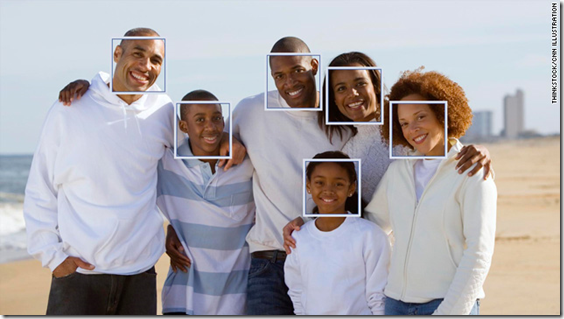
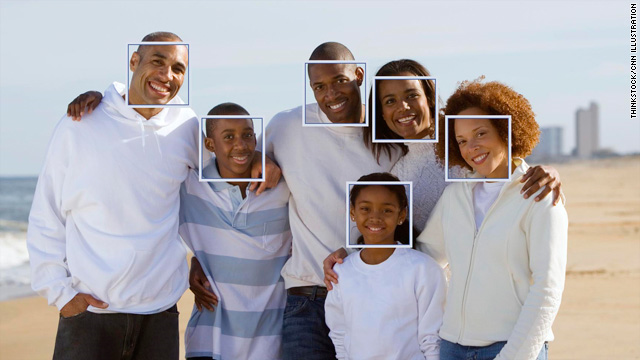
Much of the article was dedicated to describing the benefits and deficiencies of facial recognition software used by online services like Facebook, Picasa and iPhoto to make it easier for users to keep track of photographs.  Speaking of such functionality,  Michael Sipe, vice president of product development at Pittsburgh Pattern Recognition, a Carnegie Mellon University split-off company that makes face-recognizing software said these types of photo programs are a response to the hassles of keeping track of growing digital photo collections.

"In general, there’s this tsunami of visual information — images and video — and the tools that people have to make sense of all that information haven’t kept pace with the growth of the production of that information," he said. "What we have is a tool to help extract meaning from that information by using the most important part of that media, which is people."

It is interesting that one of the most distinguishing attribute of a person’s identity – his or her face – is so difficult for computers to recognize.  We humans often say, “I can remember faces much better than names,” yet computers are just the opposite.  It turns out that a person’s smile, which may be one of the most easily-remembered feature of the human face (for us humans, at least), is the most difficult for computers to comprehend:

Anil Jain, a distinguished professor of computer science at Michigan State University, said it’s still not easy, however, for computers to identify faces from photos — mostly because the photos people post to the internet are so diverse.

Computers get confused when a photo is too dark, if it’s taken from a weird angle, if the person is wearing a scarf, beard or glasses or if the person in the photo has aged significantly, he said.

Smiling can even be a problem.

"The face is like a deformable surface," he said. "When you smile, different parts of the face get affected differently. It’s not just like moving some object from one position to another," which would be easier for a computer to read.

So … what will happen when this technology matures and makes the leap from family-friendly Facebook to applications in real live security or survellance applications?

Marc Rotenberg, executive director of the Electronic Privacy Information Center, said the motives behind the technology are what worry him.

Governments and corporations intend to use facial recognition software to track the public and to eliminate privacy, he said, noting that automatically identifying people in public in the U.S., when they are not suspected of a crime, could be a violation of constitutional rights.

When facial recognition comes to surveillance cameras, which are already in place, "you’re no longer racing through iPhoto to figure out how many pictures of Barbara you have," Rotenberg said. "You’re walking around in public and facing cameras that know who you are. And I think that’s a little creepy."

I suppose this is like many other technologies – there are an abundance of positive applications, and the potential for terribly nefarious uses.

For example, if facial recognition can be used to identify  terrorists so they could be detained prior to boarding airplanes, we would generally think that was a good application. 

Similarly, if I could be granted entrance to my corporate office building or be logged onto necessary computer systems just by smiling (or frowning) into a camera, the building and computer systems might be more secure and the present-day use of passwords or ID cards might go the way of the buggy whip.

However, if an abusive husband used facial recognition software to stalk his estranged wife, or if the government successfully tracked every movement its citizens made in the normal course of events, we would generally think of those applications as negative.

I have a crazy habit of smiling and waving at security cameras I see in airports or banks or convenience stores. Who knows what is happening on the other side?  At the present level of today’s technology, I’m probably being recorded and not much more.  In a few years, however, the sophisticated software behind the camera will probably recognize Mark Dixon and report my antics to the NSA.  That will surely make me frown, not smile, when I wave to the ubiquitous cameras.

Comments Off on Why face recognition isn’t scary — yet . Permalink . Trackback URL
 

Introducing Oracle Identity Management 11g

Identity
Author: Mark Dixon
Tuesday, July 13, 2010
12:58 pm

I am pleased to announce the official public webcast introducing Oracle Identity Management 11g:

Date: Wednesday, July 21, 2010
Time: 10:00 a.m. PT / 1:00 p.m. ET

image

Amit Jasuja,  Oracle’s Vice President Identity Management and Security Products, will lead the discussion, as he and other Oracle executives:

image

“… introduce a new and revolutionary approach in application security – Oracle Identity Management 11g.

“Modern enterprise architectures are evolving rapidly, yet many security solutions in use today represent decade old technology. Businesses must adapt swiftly to stay competitive, yet bolted-on security controls impede IT agility. Compliance mandates continue to grow in number, while organizations continue to struggle with their staggering costs and complexity.

“Oracle Identity Management 11g redefines the architectures that secure the modern enterprise, ushering in a new era of agile security, rapid ROI, and sustainable compliance. Join us to learn more about the exciting new developments.”

I’m looking forward to this event.  We hope you can join us, too.

You can register by clicking here.

Technorati Tags: ,
Comments Off on Introducing Oracle Identity Management 11g . Permalink . Trackback URL
WordPress Tags: ,
 
Copyright © 2005-2016, Mark G. Dixon. All Rights Reserved.
Powered by WordPress.