[Log In] []

Exploring the science and magic of Identity and Access Management
Thursday, June 11, 2026

IT Culture and Web 2.0

Identity
Author: Mark Dixon
Thursday, May 18, 2006
6:29 am

James McGovern posted a very insightful list of contrasts between traditional enterprise IT culture and Web 2.0 possibilities.
As usual, James had a unique style of using photos on his blog. I’m not sure if traditional IT culture is best represented by the chimp at the top of his list or the bimbo at the bottom. 🙂

Technorati Tags: ,
,
,

Comments Off on IT Culture and Web 2.0 . Permalink . Trackback URL
 

Identity Technology – Nearing Critical Mass

Identity
Author: Mark Dixon
Thursday, May 18, 2006
6:18 am

Phil Becker proposes in his ZDNet article that “Identity technology is today nearing critical mass on the enterprise security and manageability curve. Driven by increasing regulatory requirements, identity management has deployed in some form at most very large companies, and new technologies and methodologies are reducing the cost of such deployments enough that this technology is moving down market in a way that indicates critical mass is quite near indeed.”

However, “disrupting technologies don’t yet have identity technology they can reasonably leverage to release their value propositions beyond a sort of early demonstration phase.”

Phil then concludes, “we are nearing many tipping points in the next two years or less, where disruptive technologies combined with appropriate identity technologies will create real business model disruption in many industries very rapidly.”

I think this all means that something is about to explode!

Technorati Tags: ,
,

Comments Off on Identity Technology – Nearing Critical Mass . Permalink . Trackback URL
 

Law of Informational Identity

Identity
Author: Mark Dixon
Thursday, May 18, 2006
4:54 am

Dr. Miriam Lips posted an interesting discourse about the UK government’s Identity Management Policy and the UK Identity Cards Bill. She states that “To further facilitate this development the government will provide Identity Verification services for accredited organisations to check an individual’s identity, for instance when opening a bank account or registering with a GP.”

Does that mean Queen Elizabeth will become an official Identity Provider? She is a trustworthy soul.

Dr. Lips (gotta love that name!) provides an enlightening discussion about the historical progression of paper-based Identity, referencing “two models for citizenship attribution and the related issuing of passports to citizens, namely on the basis of ius soli (‘law of the soil’) and ius sanguinis (‘law of the blood’).” She proposes that the UK Identity Card is an example of “the newly developing model of citizenship attribution, the ‘law of informational identity‘.”

Technorati Tags: ,
,
,
,

Comments Off on Law of Informational Identity . Permalink . Trackback URL
 

AJAX – for Hotels

General
Author: Mark Dixon
Wednesday, May 17, 2006
10:03 pm

My son, David, just showed me an interesting website he recently created for the New Sheridan Hotel in Telluride, Colorado. An interesting tidbit was how he used AJAX to display alternate internal views of the hotel guest rooms. When you click on the guest room selector boxes at the bottom of the page, you will see AJAX at work, providing photos and decriptions of the different guest rooms, without refreshing the whole page.

The inventors of Java Script and XML should be proud!

Technorati Tags: ,
,

Comments Off on AJAX – for Hotels . Permalink . Trackback URL
 

One Year and Counting

Identity
Author: Mark Dixon
Wednesday, May 17, 2006
9:32 pm

I just realized that I slipped silently past my first year anniversary of blogging and didn’t even realize it. It was on May 13, 2005, that I posted my first blog entry, discussing the Sun/Microsoft interoperability project. I’ve learned much in the last year about Identity and other stuff. Happy Anniversary to Discovering Identity! Thanks for stopping by for a quiet little celebration.

Technorati Tags: ,
,
,

Comments Off on One Year and Counting . Permalink . Trackback URL
 

Best Buy – Synchronized Credentials

Identity
Author: Mark Dixon
Wednesday, May 17, 2006
8:03 pm

Have you ever ordered online and then driven to the store to pick up your merchandise? It works nicely if you need something in a hurry.

Best Buy’s invitation to “Buy online – pick up in store” or similar offers from other vendors presents an interesting need for Identity synchronization.

When a customer order online, he or she will present digital credentials of some sort to place an order. To pick up an order at the store, that customer will probably present a drivers license or some other physical identification. Physical Identities and Digital Identities in this case need to be in sync.

Technorati Tags: ,
,
,
,

Comments Off on Best Buy – Synchronized Credentials . Permalink . Trackback URL
 

Best Buy Sponsors Digital Mashup Conference

Identity
Author: Mark Dixon
Wednesday, May 17, 2006
7:53 pm

I find it interesting that Best Buy is a sponsor of the Identity Mashup Conference organized by the Berkman Center for Internet and Society at Harvard Law School.

But I shouldn’t have been surprised. Best Buy is a “big dog” with a vested interest in Digital Identity – to reduce fraud, I presume, and create a better, more secure user experience for its customers.

Technorati Tags: ,
,
,
,
,

Comments Off on Best Buy Sponsors Digital Mashup Conference . Permalink . Trackback URL
 

Credit Bureau as Identity Provider?

Identity
Author: Mark Dixon
Monday, May 15, 2006
8:18 pm

I’ve been trying to wrap my mind around the roles different institutions will play if User-Centric Identity takes off.

Will the Credit Bureaus (Equifax®, Experian® or TransUnionSM) become Identity providers? They kind of act in that role now:

  1. A consumer wants to buy something on credit from a vendor, so he claims to be creditworthy.
  2. The vendor doesn’t take the claim at face value, but requests validation from a credit bureau.
  3. Based on evaluation of actions performed previously by that applicant, the credit bureau issues a credit score to the requesting vendor.
  4. Based on the credit score, the vendor decides whether or not to extend credit to the consumer.

This interchange sounds much like the role proposed for Identity Providers in user-centric identity scenarios.

But now the questions:

  1. Will online vendors be willing to pay a fee for each identity verification?
  2. Will consumers be willing to pay a fee for these transactions?
  3. Will consumers trust credit bureaus to deliver reliable information?
  4. Will credit bureaus offer the service out of the goodness of their hearts?
  5. Does anyone really care?

All joking aside – I believe the business relationships that do and will exist between consumers, vendors and identity providers are every bit as important as the underlying technology. But I hear people talking more about competitive protocol stacks than business plans.

Technorati Tags: ,
,
,
,


The Thick of Thin Things

General
Author: Mark Dixon
Monday, May 15, 2006
7:44 pm

If you are anything like me, you always have a list of good things you can do that stretches way beyond the limits of your available time. Choosing which of the many tasks to accomplish is a big challenge.

Steven R. Covey gives this advice: “There always will be items on your “to do” list. The trick is to figure out which are priorities. You must first attend to what’s both urgent and important. But to be truly effective you should spend as much time as possible doing important things that aren’t urgent. Otherwise, you can spend all day in the thick of thin things.”

I like that phrase, “the thick of thin things.” It conjures up visions of intense action with no real purpose – kind of like a dog chasing its tail, or like our cow that figured out how to suck all the milk out of her udder – leaving nothing for us to sell.

Every once in a while, I need to sit back, re-evaluate my long list, and check for “thin things” that can be safely discarded in favor of activities that will have more lasting value. I don’t always make the right choices, and too often find myself engulfed in triviality, but then I sit back, think of thick and thin things, and try again.

By the way, I’m old enough that when I went to BYU, Steve Covey was just a popular teacher on campus, not the superstar consultant and author we know today. The first book of his I read (back in the early 1970’s) was entitled, The Spiritual Roots of Human Relations. Highly recommended.

Technorati Tags:
,

Comments Off on The Thick of Thin Things . Permalink . Trackback URL
 

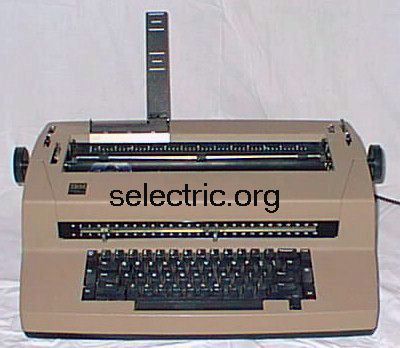
Typewriter? What is that?

General
Author: Mark Dixon
Friday, May 12, 2006
2:44 pm

We Sun folks on the internal Phoenix office mailing list received this email from our admin this morning:

“Hi all. I was asked to put out a poll to the office concerning the typewriter. Please give me your opinion on either removing it from the office or do you think it is needed?”

Typewriter? I didn’t realize we still had one.

My colleague Mark Mulligan responded:

“If you keep it in the lobby, you need to create a placard with the date the thing was manufactured, the era it was used, who invented it, etc. Then also place similar items next to it with corresponding placards: an abacus, wheel, flint stone, etc.”

“I am also very big on dioramas–maybe a shoebox depicting a1950’s nuclear houshold getting their first typewriter.”

This reminded me of an event, many years ago. My oldest son was six years old when he saw a typewriter for the first time and said, “What is that?”

I explained, “It’s something like your computer …”

At that moment, I realized that the typewriter/computer paradigm had completely reversed. When I was young, a computer teletypewriter was explained to me as being “like a typewriter …”

Perspective certainly changes with time.

Now, does anyone want to discuss how my old slide rule is “something like your calculator …?”

Oh! I got a response from that, too:

“Ah, but the slide rule is much more versatile than a calculator, being able to solve complex computations with only 2 moving parts! Unfortunately requires practice and skill being analog rather than digital.”

Thanks, Timothy McFadden, for rembering the elegance of the venerable slip stick.

Technorati Tags: ,

Comments Off on Typewriter? What is that? . Permalink . Trackback URL
 
Copyright © 2005-2016, Mark G. Dixon. All Rights Reserved.
Powered by WordPress.