[Log In] []

Exploring the science and magic of Identity and Access Management
Saturday, December 6, 2025

Moving to WordPress: DiscoveringIdentity.com

Identity
Author: Mark Dixon
Tuesday, December 29, 2009
1:46 pm

wordpress Today, I imported all entries from the Discovering Identity blog from blogs.sun.com into my WordPress blog at DiscoveringIdentity.com.  I believe that I will have more flexibility in publishing my blog and associated content using the WordPress publishing engine than was available on the Roller site.

The blog is now hosted at Dreamhost, which has excellent facilities for hosting WordPress blogs.

I will double-post content to both the DiscoveringIdentity.com and blogs.sun.com sites for the forseeable future, but do not intend to provide further upgrades to the structure of the blogs.sun.com site.

feed-icon-16x16  If you care to follow my postings on the new site, please bookmark the RSS feed.


Experimenting with FOAF

Identity
Author: Mark Dixon
Wednesday, December 23, 2009
4:55 am

Thanks to the help of Henry Story, who recently presented the concepts of FOAF (an acronym of Friend of a friend) in a Sun Identity Interest teleconference forum, I have begun to experiment a bit with the technology.

According to the FOAF Wikipedia article:

FOAF is a descriptive vocabulary expressed using the Resource Description Framework (RDF) and the Web Ontology Language (OWL). Computers may use these FOAF profiles to find, for example, all people living in Europe, or to list all people both you and a friend of yours know. This is accomplished by defining relationships between people. Each profile has a unique identifier (such as the person’s e-mail addresses, a Jabber ID, or a URI of the homepage or weblog of the person), which is used when defining these relationships.

The FOAF project, which defines and extends the vocabulary of a FOAF profile, was started in 2000 by Libby Miller and Dan Brickley. It can be considered the first Social Semantic Web application, in that it combines RDF technology with ‘Social Web’ concerns.

The FOAF project provides a way for me to maintain my personal Identity profile and link to others I know, creating a global social graph of acquainted people.  I don’t know much yet, but am intrigued by its possibilities.

You can visit my FOAF Card by clicking here, or view the XML for the corresponding FOAF file by clicking here.

If you have a FOAF file and would like to be added to my “knows” list, please send my the URL for your FOAF file.

Thanks!  I’ll keep you updated on my progress.

Comments Off on Experimenting with FOAF . Permalink . Trackback URL
 

My Christmas Wish List: Personal Identity-Persona Service

Identity
Author: Mark Dixon
Wednesday, December 23, 2009
3:55 am

christmas_wish_list It is almost Christmas Eve.  In the midst of an insomnia episode, I conjured up a crazy notion of making a Christmas wish list of things I want from a Personal Identity-Persona Service (PIPS).   Your list may be different, but here’s mine.

  1. Secure Identity Bank Vault for my Identity Profile and Credentials.  Of all the potential Identity Providers jostling for prominence in the market, I favor my bank the most.  They take pretty good care of my money, enable me to selectively send some of my money to other people, and seem to be sensitive to the issues surrounding security, privacy, liability and potential cyber threats.  I think I could trust them to take good care of my online Identity.  Think of it as the bank providing a safe deposit box for all the Identity attributes that I want to store and use, and providing the means to selectively take out Identity attributes for presentation to other people.  This vault should be located in a secure cloud, so I can get access from any computer or mobile device of my choice.  I think this is a concept even my technology-challenged wife, mother and father could readily understand and accept. 
  2. Really Easy to use Identity/Profile/Persona Editor.  With my Secure Identity Bank Vault in place, I need a really easy to use way to fill that vault with my Identity information and maintain it over time.  This will include the information I would normally include provide to an online merchant or social network, as well as subsets of such information that I can define for the purpose of presenting different personae to facilitate different online experiences.
  3. Multiple Levels of Identity Assurance or Validation.  I want to make sure that other people can’t impersonate me by setting up a  fake Identity Bank Vault for Mark Dixon that could be used to conduct illicit transactions.  To do that, methods need to be in place to validate the claims I make about my identity, such as birthplace, social security number, credit card numbers, etc.  Progressively rigorous checks of my background information will allow me to confidently present Bronze, Silver, Gold or Platinum Identity credentials to enable different levels of online interaction.
  4. Really Easy to use Persona Selector.  I need the ability to easily select from a set of personae I have defined in the Identity Bank Vault.   For example, I will most likely have one persona to use for online shopping, one for interaction with state government, and another for using my church website.  This selector needs to be immediately accessible, probably in the browser toolbar.  For mobile use, the persona selector needs to be easily accessed and presented by any online application that requires me to log in or pay for services.
  5. Multiple Levels of Secure Authentication.  I want to make sure that no one can access and use my Identity Bank Vault or persona and credentials it contains without my explicit permission.  In some cases, I may want to simply surf the web and virtually window shop by identifying myself with a user name and password.  However, I would like to restrict access to any financial transactions or health care record access by requiring a digital certificate (probably on a USB fob) and perhaps with a fingerprint check (perhaps via that same USB device).
  6. Option to Use Separate Personae for Login and Payment.  In some cases, I may want to use an Internet Persona to poke around the web, do some window shopping and try things out.  I may want to log in to Amazon, eBay, Barnes and Noble or other merchants before I decide to buy.  None of these merchants needs to know my credit card information before I decide to buy something.  Therefore, I need an easy method for first identifying myself and subsequently presenting my payment method.
  7. Audit Reports.  I would like to get an online “Identity bank statement” each month or on demand, detailing the my use of PIPS service.  This would allow me to verify that all uses were legitimate and would help me determine if adjustments were needed in my profile or use of the service.
  8. Fraud Insurance.  If a privacy breach or other unauthrorized use of my Identity or credentials occur through no fault of my own, I would like to be insured against possible damages.  This would be similar to the fraud protection currently provided by credit card companies.

Of course, in order for a PIPS service to be worth much, social Networks, online merchants, government agencies and other relying parties will need to accept my PIPS profile and credentials.   But wouldn’t it be great if I could maintain one set of Identity and Profile information and have that available for consumption by any merchant or social network, according to my wishes?  I would be willing to pay a yearly fee for such a service, much like I pay certain bank fees now. Or, perhaps those fees would be waived if I maintained a certain account balance or averaged a certain transaction volume on a credit card issued by the bank.

Will something like this happen?  I think so.  Probably not in 2010.  By 2015? I certainly hope so.


Federated Identity for Electronic Medical Records

Identity
Author: Mark Dixon
Thursday, December 10, 2009
2:06 pm

Many thanks to my good friend Jonathan Gershater for sending me the link to another excellent post about Identity and Healthcare.  I particularly like his illustration of using Federated Identity to facilitate trusted exchange of medical records between different medical service providers. 

A user of any (Healthcare) ServiceProvider, who has been issued a digital identity by the trusted IdentityProvider, may seamlessly interact with the healthcare providers (SPs). The user will present the digital identity issued by the IdP, the SP will verify the Identity, and the user will be granted access to the Service Provider’s application. However, based on the user’s attributes and role, the functionality available to the user will vary.  A physician may alter a medical record but only within their specialty ( a dermatologist cannot alter a prescription for spectacles). A pharmacist may view but not alter the prescription for insulin in a healthrecord.  A patient may only view but not alter their medical record.

Federated Identity for Electronic Medical Records

Comments Off on Federated Identity for Electronic Medical Records . Permalink . Trackback URL
 

Identity Enables NHIN or Health Internet

Identity
Author: Mark Dixon
Thursday, December 10, 2009
1:47 pm

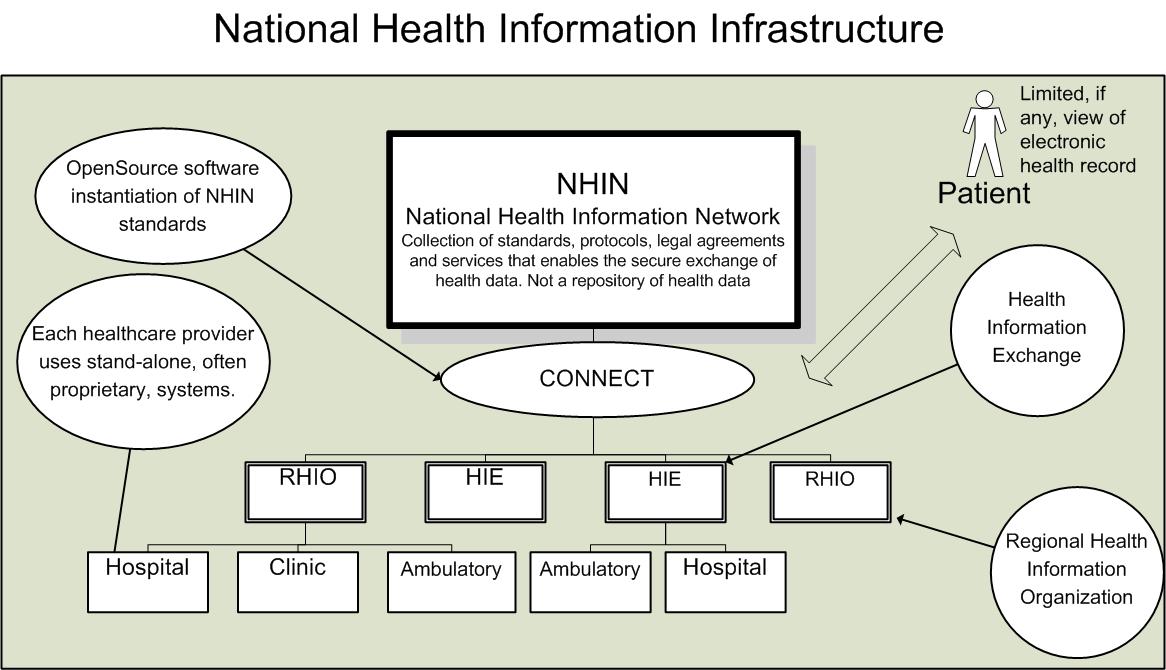
Jonathan Gershater recently published an interesting blog post exploring the conceptual differences between the National Health Information Network (NHIN) infrastructure, “a collection of standards, protocols, legal agreements, specifications, and services that enables the secure exchange of health information over the internet,” and an alternate approach known as the Health Internet, “an open-market standards-based approach to enable the exchange and sharing of electronic health data, using existing Internet standard protocols and web technologies.”

Jonathan referenced two informative posts on The Health Care Blog and Practice Fusion’s blog.  I’m still trying to wrap my mind around the significance of these two architectural directions, but it certainly appears that Identity is a critical part of the solution, regardless of what alternative approach or derivatives thereof may emerge.  Any Electronic Health Record (EHR) system must be based upon secure, flexible and scalable Identity Management system.

Thank, Jonathan, for the excellent reference.

Comments Off on Identity Enables NHIN or Health Internet . Permalink . Trackback URL
 

Trufina: Tackling the Tough Issue of Identity Assurance

Identity
Author: Mark Dixon
Thursday, December 10, 2009
1:18 pm

trufina Last week I had a stimulating conversation with Jim Kinchley and Chris Madsen, executives of Trufina, a “provider of online identity verification and identity management services, enabling individuals to verify their identity attributes online, and providing the identity management tools for sharing that verified identity information with individuals and websites across the Internet.”

In October, I posted an article entitled Identity Trend 4: Identity Assurance, one of a series of posts about important trends in the Identity Management industry. In that post I proposed, “With the continual expansion of online fraud and other threats to online security and privacy, the need for Identity Assurance methods are rising.  Being able to certify the that the correct Identity credentials are issue to the correct user before access is attempted is an increasingly critical issue.”

A few days after I authored that post, I became aware of Trufina, signed up for an account, paid a small fee, and had my Identity verified through a series of online questions drawn from publicly available information about me that presumably only I would know.  As evidence of that successful vetting process, I posted a Trufina badge on this blog (see right column).  This badge visually represents that my identity had been verified by Trufina, and provides a way that blog visitors could request a Trufina ID Card with details I elect to share.  Do you want to see how it works?  Please click on the Trufina badge or click here, enter your email address, and I’ll send you a link to see my Trufina-verified Identity Card.

Trufina provides a public API to allow websites to take advantage of Trufina identity validation services.  For example, the Naymz online Professional Reputation Network allows members to link their Trufina Verified ID to the Naymz profile.  In such a case, the Trufina Verified ID badge is shown on the Naymz member profile.  I don’t use the Naymz network as extensively as LinkedIn or Facebook, but neither of those more popular social networks have validated my Identity as well as Naymz has done, thanks to the Trufina process.

I look forward to seeing how Trufina progresses in the marketplace.  We really need a critical mass of easily accessible, yet secure, Identity validation services to increase the level of trust and confidence in online relationships.


Video: Identity Management – Pathway to Enterprise Agility

Identity
Author: Mark Dixon
Wednesday, November 25, 2009
10:52 am

After the CIO Frankly Speaking Breakfast event in Toronto on November 17th, Michelle Dennedy and I fielded questions about Identity Management from John Pickett of IT World Canada on camera.  A short video emerging from that interview was published on the IT World Canada website today.

CIOVideo

I couldn’t figure out how to embed the video on this blog post, but clicking on the image will take to you to the IT World Canada website where you can view the video.


IAM is a Journey, not a Project

Identity
Author: Mark Dixon
Tuesday, November 24, 2009
5:26 am

In our recent CIO Roundtable tour, a question about Identity and Access Management that emerged in every session was, “where do I go from here?”  It is one thing to talk about the theory of IAM; it is quite another thing to actually implement it in your enterprise.

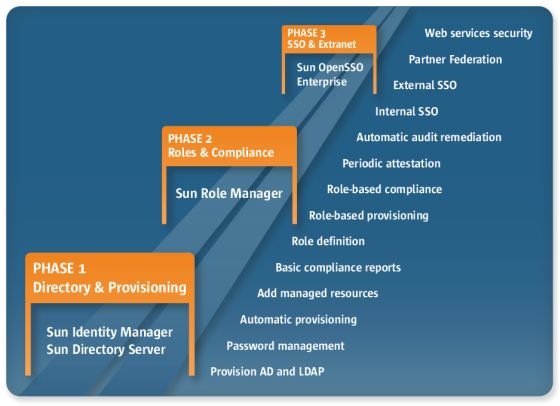
My advice to the Roundtable participants and to you is this, “IAM is a journey, not a short-term event. Enterprises must begin to approach compliance as a long-term program, not a single project.  Take stock of where you are now, set objectives for where you want to be in the future, and execute your strategy in stages.”

To illustrate this process, the white paper I recently wrote, Identity and Access Management: Enabling HIPAA/HITECH Compliance, proposes thirteen best practices for approaching the application of IAM to HIPAA/HITEC compliance efforts.  Recognizing that IAM is a journey, not a project, is one of the best practices.

Think program, not project. HIPAA/HITECH compliance is a journey, not a short-term event. Enterprises must begin to approach compliance as a long-term program, not a single project. An effective and holistic compliance program should also incorporate governance and risk management. Boards of directors and executives are frequently being held to higher standards than ever before as they are expected to be knowledgeable about, and held liable for, everything going on within the enterprise.

roadmap

The step-by-step process depicted above doesn’t fit everyone.  It only serves to illustrate the need to for defining your IAM journey as a series of phases subdivided into measureable steps.  Our experience has shown that those enterprises who follow this basic process usually succeed, while those who attempt to do much all at once, or focus on one small tactical project, often fail to realize the benefits of a well-executed IAM strategy.

Happy trails!  (I couldn’t resist that last comment, even though the “happy trails” comment in my previous post dealt with airline travel, not IAM journeys.)

Comments Off on IAM is a Journey, not a Project . Permalink . Trackback URL
 

Lax Identity Enforcement with TSA. Really?

Identity
Author: Mark Dixon
Tuesday, November 24, 2009
1:48 am

I read a disturbing article by Dan Schwab of Fox Chicago News this morning entitled “Probe: ID rules lax at Chicago airports.” Perhaps the fact that I will board my 13th flight segment in two and a half weeks this afternoon fueled my interest in the article, which reported “a Fox Chicago News investigation discovered a major loophole at TSA checkpoints at O’Hare and Midway.”

During the past two months, Fox flew multiple employees – male, female, black, white, and Muslim – to different destinations around the country on different airlines.

The only requirement: They were not allowed to bring a photo ID. No passport. No driver’s license.

On every occasion, these Fox employees were allowed through security without a hitch as long as they showed that the name on their boarding pass matched the name on a couple of credit cards, according to Fox Chicago News.

Credit cards for identification?  What happened to the requirement of a photo ID?  This shows a remarkable lack of TSA compliance with recommended policy:

The federal Sept. 11 Commission’s final report included 10 pages that focused solely on the issue of terrorism and identity fraud. The report states: “Travel documents are as important as weapons. Fraud is no longer just a problem of theft. At many entry points to vulnerable facilities, including gates for boarding aircraft, sources of identification are the last opportunity to ensure that people are who they say they are.” …

By checking credit cards rather than a photo ID, TSA simply was following its own rules, which vaguely state that passengers without an acceptable ID will have to provide “information” to verify their identity, according to Fox Chicago News.

I’m not a big fan of the TSA.  To me, it is at best a huge, bumbling bureaucracy, and at worst, a huge, oppressive police force.  I really don’t feel safer because of them.  However, regardless of my feelings, this is a clear example about how poorly executed identity policy can lead to easily exploited security breaches, even as a false aura of safety is provided for the law-abiding majority, who obediently shed shoes and jackets, empty pockets and briefcases, and subject themselves to humiliating searches while many obvious loopholes remain.

Just one example … next time you go through the TSA screening process, notice how closely (or not) airport employees’ ID badges are examined. 

Happy trails!

PS.  The Dave Granlund cartoon reminds me of the time I brought exercise weights with me on a trip.  My luggage was manually searched every time – on each of four flight segments that week.  I now keep those dastardly weights safely at home with my horribly dangerous one-inch pocket knife.  Bitter?  Nah!

Technorati Tags: , , , ,
 

Identity and Access Management – Enabling HIPAA/HITECH Compliance

Identity
Author: Mark Dixon
Wednesday, November 18, 2009
2:52 am

hipaa The white paper I mentioned several days ago, Identity and Access Management – Enabling HIPAA/HITECH Compliance, is now hot off the press and ready for download.  Thanks to all the great people at Sun Microsystems that contributed to this project and made it a reality.  Hopefully, the paper will be beneficial to those who are facing the challenges of how to comply with the increasing regulations surrounding management of healthcare data and information systems.

The paper’s abstract reads:

As healthcare organizations and vendors become more reliant on digital information technology, complying with increasing regulatory requirements presents a range of challenges. This paper explores the requirements that these organizations face, best practices for implementing identity management systems that help ensure compliance, and how Sun’s pragmatic approach to identity management simplifies the technology environment.

The table of contents:

  1. Executive Summary
  2. Healthcare Information Technology Challenges
  3. Health Insurance Portability and Accountability Act (HIPAA)
  4. Health Information Technology for Economic and Clinical Health Act (HITECH)
  5. Impact of HIPAA, HITECH and Related Regulations
  6. The Role of IAM in HIPAA/HITECH Compliance
  7. Sun IAM Product Introduction
  8. Best Practices for the IAM/Compliance Journey
  9. How to Get Started with HIPAA/HITECH and IAM
  10. The Sun IAM Workshop
  11. References

Please let me know if you have any questions or would like to discuss the content in more detail.

Comments Off on Identity and Access Management – Enabling HIPAA/HITECH Compliance . Permalink . Trackback URL
 
Copyright © 2005-2016, Mark G. Dixon. All Rights Reserved.
Powered by WordPress.